Saturday, 4 January 2014

iPhone Sky Photos

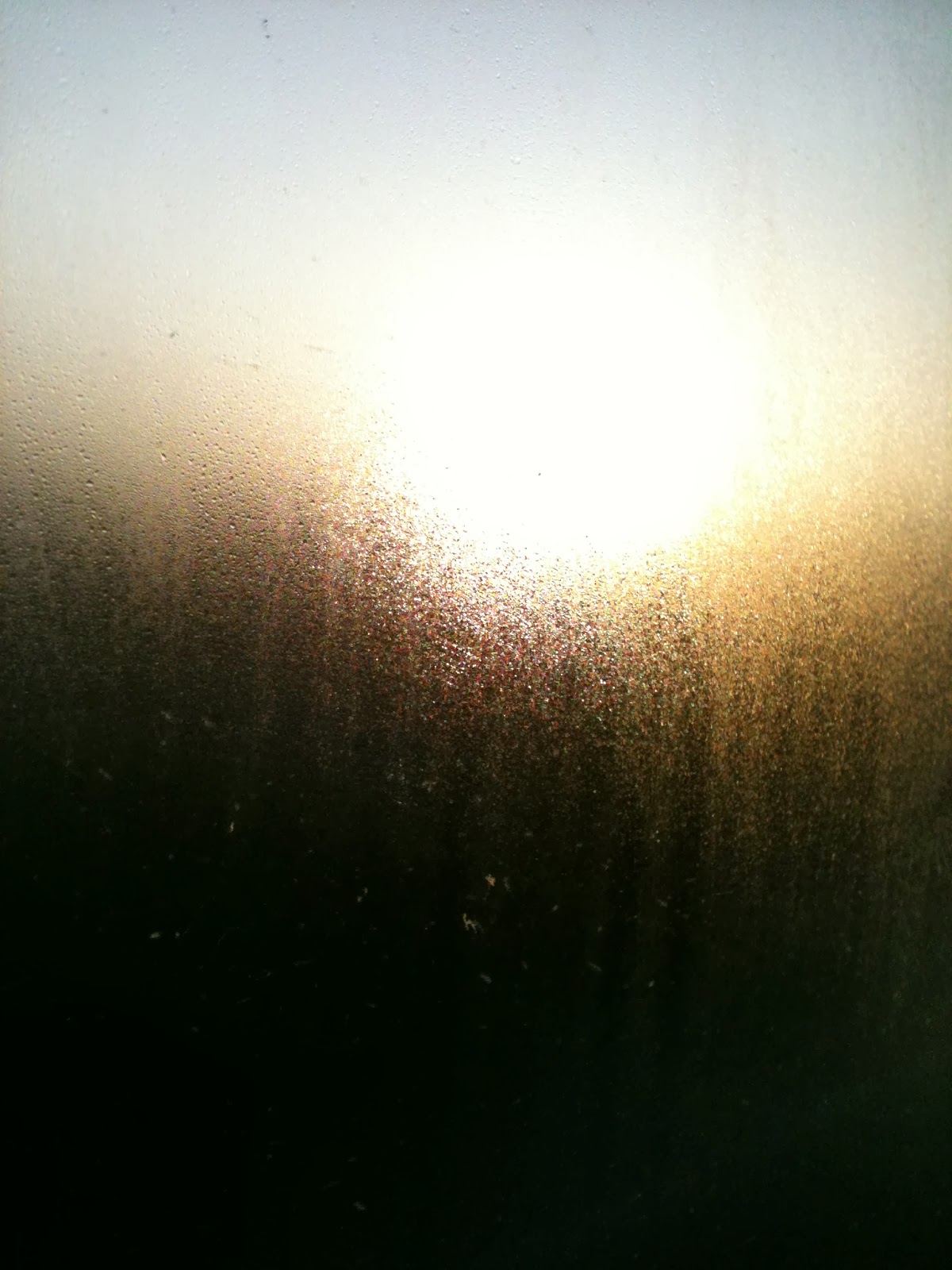
Over the last couple of months, I have been using my phone to capture all the interesting, unusual and beautiful skies and sunsets we have been getting. Here are a few of the photographs, unedited, which I have taken, often from my bedroom window!


Wednesday, 20 November 2013

Photographers using shadows - Paul Strand, Russ and Reyn and Henri Cartier-Bresson

Paul Strand, Porch Shadows, 1916
Paul Strand
 
I like how Paul Strand has used the shadows in this photograph because it makes what would otherwise be quite a bland image into something much more interesting with lots of different shapes and angles within it. The lack of colour emphasises these shapes and helps to show what beautiful patterns can naturally be made by blocking out sections of light. I also like how the areas of light and shadow make the image become quite abstract making it unclear what the object is so you focus on the shadows and patterns made.


RussandReyn Shadow Drama   Russ and Reyn
Russ and Reyn
 
Russ and Reyn's photograph is a much more modern and quirky use of shadows. I think the simplicity of the composition is successful because it is the creative idea of using the shadow in this way which really makes the image effective in my opinion, so there's no need to complicate it with the composition too.
 
 
Henri Cartier-Bresson
 
 This photograph by Henri Cartier-Bresson appeals to me because of the way he has used the shadows. The profile of the person on the chair gives the image a creepy feeling as it seems like someone unknown is watching the chair and waiting. Because you can't see their features it feels more anonymous, like they are hiding their identity. I also think the use of shadows in the background is successful because it just gives the image a few more interesting shapes to look at. Because they make the background slightly darker too, it makes the white chair in the sun stand out even more so it's obviously the main focus of the image.


Tuesday, 19 November 2013

Photogram Artists - Abelardo Morell, Ethan Jantzer and Adam Fuss

Abelardo Morell
 
I particularly like these photograms by Abelardo Morell because of the tones, lines and shapes created through using the glasses in the images. I think the patterns created through the glass give the images a very delicate feeling which represents the objects well. It gives you more of an idea of how the object looks and feels rather than just creating a silhouette from it. I also think the simple composition of having only the glass in the centre of the frame helps to make these so successful because it means all your focus is on the interesting effects from the light rather than getting distracted by a complicated composition too.


Dandelion silhouettes photogram by Ethan Jantzer
 Ethan Jantzer
 
This photogram appeals to me because of the different strengths of the lines. The contrast between the sharp lines at the front and the softer edges from the dandelion behind gives this photogram more layers to it and makes it feel more three-dimensional and real to me. The different tones also help you to realise which pieces are in front of which with the stronger silhouettes being nearer the front. Often with photograms if two objects are overlapping you can't distinguish between the two because they just come out as one colour but the fact that you can tell where each piece is in this image makes it much more effective and interesting to look at.
 
 
Adam Fuss
 
I prefer Adam Fuss' more abstract photograms because I think he manages to create such interesting textures and shapes, it isn't necessary to know exactly what the object is as that may sometimes take away from the mystery of the shapes. I particularly like this piece because in one simple photogram, there are so many different sections that make the piece so exciting and unusual to look at. For example, the bottom left corner looks very smooth and peaceful, then it goes into quite a rough speckled section before transforming into the middle section which looks smoky and ghostly.


Sunday, 3 November 2013

Experimental drawing - Jennifer West, Rebecca Horn and Elizabeth Hoak-Doering


 Jennifer West
 
Jennifer West creates these pieces by hand manipulating her film using a variety of methods such as dye, deodorant or skateboard wheels. I think it's a really interesting method of adding marks onto the images because she won't have much control and won't be able to replicate the same patterns again which makes each piece more original and unusual in my opinion. The vibrant, unnatural colours created are eye-catching and give the photos a more modern and futuristic feeling. It makes me think about how old photographs weather with age but with technology developments, in the future this is how they may look when they've been left alone for a long time. I also like the photos as a set in the big strip as I think they work well with the continuous manipulation running through them.

Rebecca Horn
 
'Pencil Mask' by Rebecca Horn was created in 1972. It is strapped around the face to 'transform the wearer's head into an instrument for drawing'. The pencils are approximately 2 inches long and Horn has described how she 'moves her body rhythmically from left to right infront of a white wall. The pencils make marks on the wall the image of which corresponds to the rhythm of the movements.’ This piece interests me as the actual mask itself is as much a piece of art as the drawings created from wearing it. I think it may be particularly successful in creating impressions of landscapes as the drawings themselves won't be very detailed yet I think you would still be able to create an effective impression of soft light areas such as the sky compared to maybe darker and denser areas such as woods possibly. However, Horn may have used the mask to create more personal pieces because as she said the marks correspond to her movements, she may have moved in a way which reflects her emotions or feelings to create a piece reflecting that rather than something which she can see.
Elizabeth Hoak-Doering
 
This drawing is from the series 'things, witnesses!' where Elizabeth hung objects such as an office chair, a bedframe, a kitchen table and a hat rack from the ceiling of a building. Motor sensors were attached so when people walked past, the object moved and created part of the drawing. This means that when the exhibition was initially set up, there was no drawing but as people came in and visited the pieces, the drawings gradually developed. I quite like the technical aspect of these drawings because even though you don't know how they will turn out because it depends on how many people walk past and when, they make interesting shapes and patterns on the paper. I also like the way that in the exhibition, although it's Elizabeth's work as it was her idea, she has no control over how the drawings will turn out. In some ways it makes them quite neutral as they are free from any pre-conceived ideas about what makes something look successful and appealing as it's all automatic.

Thursday, 31 October 2013

Artists who using walking within their work


Vito Accounci, Follow Piece, 1969
Vito Acconci
 
Vito Acconci's 'Following Piece' consisted of him following passers-by around NYC until they entered private property. This ranged from 2-3 minutes while they walked to their car and he didn't have chance to find a taxi to follow it, up to 7-8 hours where they went to watch a film or to a restaurant. This piece was created in 1969 so was one of the first pieces of performance art. It was the start of the change in art, in the late 60s, where artwork moved from being just pieces in galleries to outside, exploring real issues in the world - this is what makes this piece significant to me. Because I prefer looking at conceptual artwork which has an interesting meaning or story behind it, I think this piece is important as it helped start such a big area of what is considered art today by using a quite simple idea, it has had a big impact.
 
 
Stanley Brouwn
 
This piece - 'Steps of pedestrians on paper' - was created by Stanley Brouwn. He left blank pieces of paper on the streets of Amsterdam, waited for people to leave footprints on them before collecting them. I particularly like this piece because not only is it nice to look at with the subtle patterns from the soles of shoes and the unsymmetrical composition, but I think it's an interesting and unusual way of collecting information about who's been where. It reminds me of footprints in the sand however they are lost when the tide comes in but because these footprints have been recorded on paper, they can stay forever.
 
 
Teching Hseih, One Year Performance 1981
Tehching Hsieh
 
Tehching Hsieh conducted a one year performance piece where he lived for the entire year without entering any the interior of anything - building or vehicle. This meant he must always walk and live outside starting from September 26, 1981 at 2 pm until September 26, 1982 at 2 pm. He allowed himself a sleeping bag and that was all. This was one of a few one year projects he completed, all of which were equally extreme. I think he was making a point, similar to Vito Acconci, about how art can be more than just a painting. He was making people aware of different issues whilst still creating art.

Tuesday, 29 October 2013

Photos beginning with 'L'


After being given the letter 'L', I had 5 minutes to take 3 photographs, using my phone, of objects beginning with this letter. I particularly like the way the photograph of the light came out as it was just a plain white light yet when it is was photographed, some much more colourful elements appeared. The black background helps to keep it really simple too. I also think the composition of the photograph of the lead is successful because I like the way it leads you in from the top of the frame to where the photograph is in focus, near the bottom. Because I took the photograph from above the lead, it makes the perspective more interesting than if it was just taken flat on.


Wednesday, 16 October 2013

Photographers - Lewis Hine, Ansel Adams and William Klein

Lewis Hine

I particularly like this photograph by Lewis Hine because of the emotion shown through the boy's eyes. It is a really honest, genuine photo showing the feelings of just one of the many children who were working in the cotton mills. Having his eyes right in the centre of the frame means they are the first thing you notice and because he is looking directly into the camera, it feels as if he is looking right at you and explaining his life in one still shot. The connection you feel with this little boy who you know nothing about is what I think makes this photograph so significant.
 
Ansel Adams
The sense of the atmosphere is very successful in this image of Ansel Adams'. The mist covering the background with only the sunset visible creates a spooky and slightly dull feel which is exaggerated by the fact that no-one is around. The mist also makes the silhouette of the tree stronger as there is nothing to detract from it. Having the image in black and white helps make this photo more memorable and effective too because again it adds to the calm but eerie atmosphere which is what I like so much about the photograph.
 
William Klein
I especially like the composition in William Klein's photograph. It is unusual because the top of the child's head on the swing is chopped off and the other child in the bottom right corner is only just in the frame. I think this makes the photograph much more interesting to look at because it isn't how I'd expect a photograph to be composed yet it is still successful. I also like the way that because the child on the swing's eyes aren't in the photograph, you can't quite tell if they're enjoying it or not meaning the other child's face could then have various meanings too. This is a very natural snapshot of these children's lives and although we haven't got the exact story behind it, I like the way that everyone could take it in slightly different ways.